Deprecated: Creation of dynamic property WP_Term::$term_order is deprecated in D:\inetpub\vhosts\cghearth.com\httpdocs\earthcalling\wp-includes\class-wp-term.php on line 198
Deprecated: Creation of dynamic property WP_Term::$term_order is deprecated in D:\inetpub\vhosts\cghearth.com\httpdocs\earthcalling\wp-includes\class-wp-term.php on line 198
Deprecated: Creation of dynamic property WP_Term::$cat_ID is deprecated in D:\inetpub\vhosts\cghearth.com\httpdocs\earthcalling\wp-includes\category.php on line 378
Deprecated: Creation of dynamic property WP_Term::$category_count is deprecated in D:\inetpub\vhosts\cghearth.com\httpdocs\earthcalling\wp-includes\category.php on line 379
Deprecated: Creation of dynamic property WP_Term::$category_description is deprecated in D:\inetpub\vhosts\cghearth.com\httpdocs\earthcalling\wp-includes\category.php on line 380
Deprecated: Creation of dynamic property WP_Term::$cat_name is deprecated in D:\inetpub\vhosts\cghearth.com\httpdocs\earthcalling\wp-includes\category.php on line 381
Deprecated: Creation of dynamic property WP_Term::$category_nicename is deprecated in D:\inetpub\vhosts\cghearth.com\httpdocs\earthcalling\wp-includes\category.php on line 382
Deprecated: Creation of dynamic property WP_Term::$category_parent is deprecated in D:\inetpub\vhosts\cghearth.com\httpdocs\earthcalling\wp-includes\category.php on line 383
Deprecated: Creation of dynamic property WP_Term::$term_order is deprecated in D:\inetpub\vhosts\cghearth.com\httpdocs\earthcalling\wp-includes\class-wp-term.php on line 198
Deprecated: Creation of dynamic property WP_Term::$term_order is deprecated in D:\inetpub\vhosts\cghearth.com\httpdocs\earthcalling\wp-includes\class-wp-term.php on line 198
Perumal Koil Street is the second right on the way to Mission Street from the Lotus Hotel that is near Beach Road. This is important. On the other hand, nearly everybody in Pondicherry knows where the old registrar’s office used to be and some of the couples who were married at this illustrious if (then) decrepit building even came by for the opening. And what an astonishing transformation they must have seen.
The invitation to the compact 10-room property begins right off said street in the even-now French city’s bustling Tamil Quarter. The cheerful thinnai (traditional sit-out) leads to a sunlit courtyard, its floor a charming red oxide. Barring the discreet elevator and the even more discreet numbering of rooms, there is little to suggest that Maison Perumal isn’t the home of someone with considerable wealth and good taste.

CGH Earth’s uniquely elegant minimalism is in evidence here as well. The Cuddapah flooring in the bathroom is unpolished, and the furniture and gorgeously tall doors appear unvarnished. The white walls have a corrugated finish and set off the dark wood beams of the Madras ceiling superbly. Sombre, sepia-tinted photo portraits make up the décor. On special occasions such as birthdays and anniversaries, a rose and jasmine floral arrangement on the turned sheet of a bed welcomes guests to their rooms. The half-length mirror mounted on the antique wardrobe is the only concession to a dressing area. But little comforts like a spacious bathroom — no room for a tub here, of course — a coffee maker , short eats or a refrigerator with drinks, might be missed.

The stark white linen in the rooms, and ditto table cloth and flatware in the Maison Perumal restaurant, the unevenly hand-finished mustard flooring and signature-print fuchsia, purple and turquoise pillow cases (note the same exquisite pattern frames the bathroom mirror), the crisp bags fashioned out of dated newspaper for the complimentary jute bedroom slippers, the unlined wood dustbins, the neem soap from Auroville that looks like, of all things, speckled white chocolate — if God is in the details, Maison Perumal is nearly divine. But what this writer will remember the most is the tiny peengan jaadi (ceramic pickle jar) in which comes the shampoo.
Without trying too hard, the old-fashioned semi-circular tank and urns with potted plants and mossy water that cluster about the ‘lobby’ render flower-laden bronze urulis passé, and the stained-glass balconies overlooking the courtyard bring in just the right splash of irreverent colour — look for the rainbow-hued play of sunlight on the walls of the first floor in the morning.

Interestingly, the kitchen does not have a deep freezer so the catch, and mutton, is procured fresh. For dinner, non-vegetarians may have a grilled seafood platter. The chef goes to the market daily to buy the catch of the day.
Dishes outside of the house ‘theme’ may be arranged (the grilled vegetables in pesto sauce is very good). Cut fruit is available. A bar is in the offing. All of which certainly does away with the need for a menu card and is not without benefits. When a delicious lemon-and-lentil soup of the day materialized unexpectedly for dinner, it was difficult not to whoop for joy. Regardless. Maison Perumal’s classy arrival, particularly in Pondicherry’s frequently overlooked Tamil Quarter, calls for celebration. Sit across the antique desk that serves as the reception or enjoy the oonjal (the gentle, long swing crafted out of a plank of jackfruit wood). Imagine the open-to-sky mutrams when it rains — as in many traditional homes, two central courtyards let in the elements here. It took a year and a half to partly restore and partly extend this privately owned property now on long lease, and without such lavish love, this mansion would have been sacrificed to obscurity.
Link to the article here.
]]>Deprecated: Creation of dynamic property WP_Term::$term_order is deprecated in D:\inetpub\vhosts\cghearth.com\httpdocs\earthcalling\wp-includes\class-wp-term.php on line 198
Deprecated: Creation of dynamic property WP_Term::$term_order is deprecated in D:\inetpub\vhosts\cghearth.com\httpdocs\earthcalling\wp-includes\class-wp-term.php on line 198
Deprecated: Creation of dynamic property WP_Term::$cat_ID is deprecated in D:\inetpub\vhosts\cghearth.com\httpdocs\earthcalling\wp-includes\category.php on line 378
Deprecated: Creation of dynamic property WP_Term::$category_count is deprecated in D:\inetpub\vhosts\cghearth.com\httpdocs\earthcalling\wp-includes\category.php on line 379
Deprecated: Creation of dynamic property WP_Term::$category_description is deprecated in D:\inetpub\vhosts\cghearth.com\httpdocs\earthcalling\wp-includes\category.php on line 380
Deprecated: Creation of dynamic property WP_Term::$cat_name is deprecated in D:\inetpub\vhosts\cghearth.com\httpdocs\earthcalling\wp-includes\category.php on line 381
Deprecated: Creation of dynamic property WP_Term::$category_nicename is deprecated in D:\inetpub\vhosts\cghearth.com\httpdocs\earthcalling\wp-includes\category.php on line 382
Deprecated: Creation of dynamic property WP_Term::$category_parent is deprecated in D:\inetpub\vhosts\cghearth.com\httpdocs\earthcalling\wp-includes\category.php on line 383
Deprecated: Creation of dynamic property WP_Term::$term_order is deprecated in D:\inetpub\vhosts\cghearth.com\httpdocs\earthcalling\wp-includes\class-wp-term.php on line 198
So way back in the 14th century, when the Rajah of Cochin shifted his capital from Perumpadappu to Tripunithara, he set out to build a Lord Krishna temple as grand as the one in Guruvayoor in his old kingdom. The tiered edifice called Chittoorappan was built in a quiet hamlet called Cheranelloor, fringed by the backwaters of Kochi. The king would return to the temple time and again to soak in the peace and spiritual calm of the place. Soon he built a palace, just 50 yards away, where he would rest, after paying obeisance to the family deity.
Like him, we too arrived regally at the Chittoor Kottaram palace in a boat; but ours was not a royal barge steered by 18 oarsmen. The welcome, however, was regal enough as a small group of ‘retainers’, headed by Milton who now manages the palace-resort, stood at the jetty to receive us.
We clambered up and saw the white facade of the mansion unravel on glistening green lawns — a pillared one-storied structure with a red-tiled roof.
Chittoor Kottaram is the only living palace still owned by the Cochin royal family. Today it is a single key heritage hotel where only members of one family may stay. Milton ceremoniously handed us the keys of our kingdom and suggested that we play king and queen for a day. No one would be allowed to disturb us or enter the palace without our permission! No longer should we regard ourselves as commoners but as royalty and our every wish would be his command, he stated with a grand flourish.
Nature’s influence
We explored our temporary fiefdom, charmed by its nooks and crannies, its intimate spaces where one could commune with nature and each other. The entire estate was awash in the molten honey-gold rays of an end-of-the-monsoon-sun. White wrought iron chairs and a table on the lawns would be ideal for a bracing cup of tea the next day, we decided, while at the ground level veranda or on the upper one which commanded views of the glittering backwaters and a bank of water lilies, one could sit and read a book.
The mini palace had two bedrooms on the ground level and one above. We opted for the king’s room on the upper level where the spacious bathroom even had a bookcase with tomes that were royal favourites and a skylight through which natural light filtered through. Everywhere there were expanses of polished wood, red hibiscus flowers, spacious four posters draped with flowing mosquito nets, quaint writing desks and portraits of royalty that looked at us usurpers with a frown.
As a nod to royal traditions, we padded around the palace barefoot and enjoyed subtly spiced Kerala-style cuisine. That first afternoon, we savoured a royal sadya of 24 Kerala delicacies in the spacious dining room which was located in a separate, red-tiled roof cottage. It was prepared right in the adjacent kitchen.[1] [2]
That sultry afternoon, a hammock strung between two trees beckoned. As we swung in it, a Brahminy kite with magnificent wings outspread cleaved the air and soared upwards; a blue kingfisher skimmed the backwaters and triumphantly swooped away with a fish dangling in its beak; a bright-eyed and bushy-tailed squirrel bounded away. The world was a hushed spectator to it all.
Later, a sunset cruise on the backwaters was on the agenda and as our boat chugged past idyllic villages snuggling amid coconut groves, tall palms leaned across to kiss the waters. A Shiva temple rose against a darkening sky, the spire of a church stabbed a crucifix at the heavens; coconut palms fanned the sky; paddy fields stretched away to the horizon; large spidery Chinese fishing nets filtered the rays of a dying sun. Everything had a leisurely pace. Soon the sun set in fiery swirls of golds, reds, softening to mauve and pink, like nature’s own laser show.
Evening glow
On our return, we found the lawns were studded with diyas and the palace exuded a soft mysterious glow, rivaling the post-sunset sky. Post dinner, eaten off our thalis, replete with honest-to-goodness fare, a cultural performance awaited. Two priests from the Krishna temple – performers of traditional Kerala arts – arrived, bearing a drum and a brass thali. With these simple instruments and the rich baritone of the singer, they wooed the gods Krishna and Shiva, singing songs of praise in Sanskrit, much as their forefathers had done to a royal audience in another era. As we drove away the next day with many a backward glance at the palace and the temple, we resolved to return one day to “reclaim our kingdom.”
]]>Deprecated: Creation of dynamic property WP_Term::$term_order is deprecated in D:\inetpub\vhosts\cghearth.com\httpdocs\earthcalling\wp-includes\class-wp-term.php on line 198
Deprecated: Creation of dynamic property WP_Term::$term_order is deprecated in D:\inetpub\vhosts\cghearth.com\httpdocs\earthcalling\wp-includes\class-wp-term.php on line 198
Deprecated: Creation of dynamic property WP_Term::$cat_ID is deprecated in D:\inetpub\vhosts\cghearth.com\httpdocs\earthcalling\wp-includes\category.php on line 378
Deprecated: Creation of dynamic property WP_Term::$category_count is deprecated in D:\inetpub\vhosts\cghearth.com\httpdocs\earthcalling\wp-includes\category.php on line 379
Deprecated: Creation of dynamic property WP_Term::$category_description is deprecated in D:\inetpub\vhosts\cghearth.com\httpdocs\earthcalling\wp-includes\category.php on line 380
Deprecated: Creation of dynamic property WP_Term::$cat_name is deprecated in D:\inetpub\vhosts\cghearth.com\httpdocs\earthcalling\wp-includes\category.php on line 381
Deprecated: Creation of dynamic property WP_Term::$category_nicename is deprecated in D:\inetpub\vhosts\cghearth.com\httpdocs\earthcalling\wp-includes\category.php on line 382
Deprecated: Creation of dynamic property WP_Term::$category_parent is deprecated in D:\inetpub\vhosts\cghearth.com\httpdocs\earthcalling\wp-includes\category.php on line 383
Deprecated: Creation of dynamic property WP_Term::$cat_ID is deprecated in D:\inetpub\vhosts\cghearth.com\httpdocs\earthcalling\wp-includes\category.php on line 378
Deprecated: Creation of dynamic property WP_Term::$category_count is deprecated in D:\inetpub\vhosts\cghearth.com\httpdocs\earthcalling\wp-includes\category.php on line 379
Deprecated: Creation of dynamic property WP_Term::$category_description is deprecated in D:\inetpub\vhosts\cghearth.com\httpdocs\earthcalling\wp-includes\category.php on line 380
Deprecated: Creation of dynamic property WP_Term::$cat_name is deprecated in D:\inetpub\vhosts\cghearth.com\httpdocs\earthcalling\wp-includes\category.php on line 381
Deprecated: Creation of dynamic property WP_Term::$category_nicename is deprecated in D:\inetpub\vhosts\cghearth.com\httpdocs\earthcalling\wp-includes\category.php on line 382
Deprecated: Creation of dynamic property WP_Term::$category_parent is deprecated in D:\inetpub\vhosts\cghearth.com\httpdocs\earthcalling\wp-includes\category.php on line 383
Deprecated: Creation of dynamic property WP_Term::$term_order is deprecated in D:\inetpub\vhosts\cghearth.com\httpdocs\earthcalling\wp-includes\class-wp-term.php on line 198

The company has seven boats; four with two bedrooms and three with one bedroom each. All are skillfully constructed in natural materials the traditional way, yet are not lacking in comfort, with separate bathrooms and plenty of space. We were given the smallest boat, which was ideal for us, since we were able to travel along the narrower backwaters. This gave us an unending panorama of rural life, on and beside the water and across the fields. People paddled their canoes, fishermen cast their nets, children were ferried to school and birds were everywhere. Back on the lake a family of otters swam right past us. It was all very peaceful.

We had a crew of three, who could not have been more skilled and hospitable. We own a canal boat in England, so know something about handling and living on a boat. It was sheer luxury to have all the tasks done for us this time, while we could relax and enjoy every moment. The quality of the meals, prepared in a small space above the engine, was superb. Everything was fresh and beautifully presented, from the vegetables to the grated coconut and, of course, the fish. We are glad we chose to go for more than one night; it merits at least two or even three. In this way you can cover quite a large area and go ashore too, as we did when we visited a temple. Now that we know how lovely a Spice Coast Cruise can be, we shall definitely be recommending it to our friends, and we ourselves would happily do it all over again.
]]>Deprecated: Creation of dynamic property WP_Term::$term_order is deprecated in D:\inetpub\vhosts\cghearth.com\httpdocs\earthcalling\wp-includes\class-wp-term.php on line 198
Deprecated: Creation of dynamic property WP_Term::$term_order is deprecated in D:\inetpub\vhosts\cghearth.com\httpdocs\earthcalling\wp-includes\class-wp-term.php on line 198
Deprecated: Creation of dynamic property WP_Term::$cat_ID is deprecated in D:\inetpub\vhosts\cghearth.com\httpdocs\earthcalling\wp-includes\category.php on line 378
Deprecated: Creation of dynamic property WP_Term::$category_count is deprecated in D:\inetpub\vhosts\cghearth.com\httpdocs\earthcalling\wp-includes\category.php on line 379
Deprecated: Creation of dynamic property WP_Term::$category_description is deprecated in D:\inetpub\vhosts\cghearth.com\httpdocs\earthcalling\wp-includes\category.php on line 380
Deprecated: Creation of dynamic property WP_Term::$cat_name is deprecated in D:\inetpub\vhosts\cghearth.com\httpdocs\earthcalling\wp-includes\category.php on line 381
Deprecated: Creation of dynamic property WP_Term::$category_nicename is deprecated in D:\inetpub\vhosts\cghearth.com\httpdocs\earthcalling\wp-includes\category.php on line 382
Deprecated: Creation of dynamic property WP_Term::$category_parent is deprecated in D:\inetpub\vhosts\cghearth.com\httpdocs\earthcalling\wp-includes\category.php on line 383
Deprecated: Creation of dynamic property WP_Term::$cat_ID is deprecated in D:\inetpub\vhosts\cghearth.com\httpdocs\earthcalling\wp-includes\category.php on line 378
Deprecated: Creation of dynamic property WP_Term::$category_count is deprecated in D:\inetpub\vhosts\cghearth.com\httpdocs\earthcalling\wp-includes\category.php on line 379
Deprecated: Creation of dynamic property WP_Term::$category_description is deprecated in D:\inetpub\vhosts\cghearth.com\httpdocs\earthcalling\wp-includes\category.php on line 380
Deprecated: Creation of dynamic property WP_Term::$cat_name is deprecated in D:\inetpub\vhosts\cghearth.com\httpdocs\earthcalling\wp-includes\category.php on line 381
Deprecated: Creation of dynamic property WP_Term::$category_nicename is deprecated in D:\inetpub\vhosts\cghearth.com\httpdocs\earthcalling\wp-includes\category.php on line 382
Deprecated: Creation of dynamic property WP_Term::$category_parent is deprecated in D:\inetpub\vhosts\cghearth.com\httpdocs\earthcalling\wp-includes\category.php on line 383
Deprecated: Creation of dynamic property WP_Term::$term_order is deprecated in D:\inetpub\vhosts\cghearth.com\httpdocs\earthcalling\wp-includes\class-wp-term.php on line 198

The vintage bungalows of Fort Kochi, under the shade of huge rain trees, give you a vivid sense of this historical coastal town, and leave an indelible impression. You could spend a day wandering around the quiet streets looking at heritage abodes with colonial roots, donning the distinctive features of their times. Portuguese houses were painted a sepia yellow; white was used only for churches; tiled roofs were introduced too. Dutch bungalows had sloping roofs built in typical Dutch style, so that the snow could slide off, and English villas were painted a stunning white. Beach Gate Bungalows is an extension of this illustrious period of Fort Kochi’s exciting colonial history. Located on a drive lined with grand private homes, with sweeping driveways and shocking pink bougainvillea, it has two elegant, identical bungalows, separated by a low wall.
A Colonial Affair
The houses were designed in the fifties for Brooke Bond & Co, a famous tea plantation company. It was designed so that company executives could continue to experience the feel of life on the plantations while they were on mainland. The bungalows display top architectural quality with Art Deco elements, such as a pillared rounded veranda.

It is the ideal holiday home for long relaxing vacations with the family or close friends, offering complete privacy. Each villa has three spacious bedrooms, a living room, a study, a terrace, fully equipped modern kitchen, a dining room that opens onto your private pool, and a surrounding tropical garden with jackfruit, sapota and tamarind trees. There’s also free Wi-Fi, and the option of alfresco BBQ dining in the garden. The kitchen is kitted out with all the modcons, so food can be prepared by the guests with fresh produce from local markets. Alternatively, they can request the services of an on-call private chef, at extra cost. Isn’t the joy of unwinding and dining in the company of birds and butterflies in your garden, surrounded by fruit-laden trees, something else?

While the houses were architecturally sound, years of neglect was bound to cause significant damage. It might have viable to pull down the dilapidated structures and built anew, but CGH Earth were passionate about “restoring to retain”, not destroying this slice of history and heritage. Today, the bungalows may have a new sheen, reflecting a fusion of styles and modern contemporary accents, but have conserved its innate charms.

Cycles are available at the villas, for instant access to the port city’s historic monuments, art cafes and galleries, and beautiful beach. Fort Kochi is the only place in India, where the Portuguese, Dutch and English have held power, and they have left influences in this charming area. As you cycle past the other bungalows, it is not difficult to picture the lives lived here in the past; you could almost imagine a Gatsby-style party taking place here. And then, after you have seen the sights, you can retire to your own planter’s bungalow.
]]>Deprecated: Creation of dynamic property WP_Term::$term_order is deprecated in D:\inetpub\vhosts\cghearth.com\httpdocs\earthcalling\wp-includes\class-wp-term.php on line 198
Deprecated: Creation of dynamic property WP_Term::$cat_ID is deprecated in D:\inetpub\vhosts\cghearth.com\httpdocs\earthcalling\wp-includes\category.php on line 378
Deprecated: Creation of dynamic property WP_Term::$category_count is deprecated in D:\inetpub\vhosts\cghearth.com\httpdocs\earthcalling\wp-includes\category.php on line 379
Deprecated: Creation of dynamic property WP_Term::$category_description is deprecated in D:\inetpub\vhosts\cghearth.com\httpdocs\earthcalling\wp-includes\category.php on line 380
Deprecated: Creation of dynamic property WP_Term::$cat_name is deprecated in D:\inetpub\vhosts\cghearth.com\httpdocs\earthcalling\wp-includes\category.php on line 381
Deprecated: Creation of dynamic property WP_Term::$category_nicename is deprecated in D:\inetpub\vhosts\cghearth.com\httpdocs\earthcalling\wp-includes\category.php on line 382
Deprecated: Creation of dynamic property WP_Term::$category_parent is deprecated in D:\inetpub\vhosts\cghearth.com\httpdocs\earthcalling\wp-includes\category.php on line 383
Deprecated: Creation of dynamic property WP_Term::$term_order is deprecated in D:\inetpub\vhosts\cghearth.com\httpdocs\earthcalling\wp-includes\class-wp-term.php on line 198
Deprecated: Creation of dynamic property WP_Term::$term_order is deprecated in D:\inetpub\vhosts\cghearth.com\httpdocs\earthcalling\wp-includes\class-wp-term.php on line 198
Deprecated: Creation of dynamic property WP_Term::$term_order is deprecated in D:\inetpub\vhosts\cghearth.com\httpdocs\earthcalling\wp-includes\class-wp-term.php on line 198
Deprecated: Creation of dynamic property WP_Term::$term_order is deprecated in D:\inetpub\vhosts\cghearth.com\httpdocs\earthcalling\wp-includes\class-wp-term.php on line 198
Here, I share experiences and lessons from a journey that we, as an enterprise, have undertaken.
In 1988, when we were offered the contract to reconstruct and run the resort on Bangaram Island in the Lakshadweep Islands, we were a single hotel enterprise based in Kochi with limited resources. The contract also stipulated regulations to conserve the fragile ecology of the coral atolls and protect the interests of the island’s inhabitants. Then there was the issue of remote access (that continues to this day). Making matters trickier was the fact that both the destination and offering were new and unknown in the market.

Our only solution was to attract travellers who would see the immense value in the wholeness of the offering, knowing nothing was added that could take away from the inherent beauty of the island. In fact, we only enhanced it. The advertised facilities of the hotel came to be the absence of ‘facilities’, such as telephone, television, and air-conditioning. Instead, we showcased local culture, architecture, and cuisine and provided a chance to engage with nature in its spectacular and pristine form, while treading gently. Every guest invariably came back, and wanted nothing changed.

The success experienced initially at Lakshadweep and later in Kerala clearly indicated the growing strength of the AIT (Alert Independent Traveller) demographic. The approach we took was to ‘do just enough’, with the belief that true luxury was more than the conventional meaning of `opulence of built space’. The lessons in preservation we learnt were not only the foundation of our growth but also instrumental in the decision to change our company’s name from Casino Group of Hotels to CGH Earth, to better represent the non-negotiable core values – respect for the environment, community, and the local ethos.
“More than an escape. It is about fulfillment”

Today, after 18 years and several hotels and resorts across South India, the Bangaram experience continues to inspire us. Apart from the discovery that less is more, this journey revealed that sensitive tourism does not mean restrictions; in fact, our experience showed that ecological and cultural sensitivity can be a part of the experience, making it all the more enjoyable. So it’s more than an escape. It is about fulfilment.
Deprecated: Creation of dynamic property WP_Term::$term_order is deprecated in D:\inetpub\vhosts\cghearth.com\httpdocs\earthcalling\wp-includes\class-wp-term.php on line 198
Deprecated: Creation of dynamic property WP_Term::$term_order is deprecated in D:\inetpub\vhosts\cghearth.com\httpdocs\earthcalling\wp-includes\class-wp-term.php on line 198
Deprecated: Creation of dynamic property WP_Term::$term_order is deprecated in D:\inetpub\vhosts\cghearth.com\httpdocs\earthcalling\wp-includes\class-wp-term.php on line 198
Deprecated: Creation of dynamic property WP_Term::$cat_ID is deprecated in D:\inetpub\vhosts\cghearth.com\httpdocs\earthcalling\wp-includes\category.php on line 378
Deprecated: Creation of dynamic property WP_Term::$category_count is deprecated in D:\inetpub\vhosts\cghearth.com\httpdocs\earthcalling\wp-includes\category.php on line 379
Deprecated: Creation of dynamic property WP_Term::$category_description is deprecated in D:\inetpub\vhosts\cghearth.com\httpdocs\earthcalling\wp-includes\category.php on line 380
Deprecated: Creation of dynamic property WP_Term::$cat_name is deprecated in D:\inetpub\vhosts\cghearth.com\httpdocs\earthcalling\wp-includes\category.php on line 381
Deprecated: Creation of dynamic property WP_Term::$category_nicename is deprecated in D:\inetpub\vhosts\cghearth.com\httpdocs\earthcalling\wp-includes\category.php on line 382
Deprecated: Creation of dynamic property WP_Term::$category_parent is deprecated in D:\inetpub\vhosts\cghearth.com\httpdocs\earthcalling\wp-includes\category.php on line 383
Deprecated: Creation of dynamic property WP_Term::$term_order is deprecated in D:\inetpub\vhosts\cghearth.com\httpdocs\earthcalling\wp-includes\class-wp-term.php on line 198

The water world of Coconut Lagoon is a paradise for birds and birdwatchers alike, offering a wealth of charming sights and sounds.
Paddy fields, like forests and mangroves, attract vibrant, seasonal bird life during the different stages of its cultivation. When the field is waterlogged after the harvesting, the Little Grebe (Tachybaptus Ruficollis) and Indian Coot (Fulicaatra) are its visitors. Filled with water plants such as lily, lotus and Eichhornia, the field has welcomed a new guest: the Jacanas (both bronze-winged or Metopidius Indicus and pheasant-tailed or Hydrophasianus Chirurgus). They probably have the most unique nicknames in the bird kingdom! Called the Jesus Bird and Christbird, jacanas have elongated toes and claws that help spread their weight when moving across floating vegetation, and the water plants enable them to walk over the surface foraging their prey and offer a place to nest. The impression that they walk on water, especially when the vegetation is submerged, gives them the nickname.

Different species of ducks also like to accompany them at this time, namely the Lesser Whistling Duck (Dendrocygna Javanica), Cotton Pigmy Goose (Nettapus Coromandelianus), Garganey (Anas Querquedula) and Pintail Duck (Anas Acuta). The Whistling Duck and Cotton Pigmy Goose are residents. They like to breed on the dead coconut trees and other tree holes near the fields. Chicks swimming around their parents in the post monsoon season is a common sight in the fields. The Whistling Duck or Tree Duck, as also it is known, has a wheezy, whistling “seasick, seasick”, call, uttered in flight, and roosts can be quite noisy. The migrants can be seen from October to May from different parts of the world. They are attracted here due to the warm weather – a welcome escape from the freezing European winter!

A Chartered Accountant by training, Jose Dominic is the Managing Director and CEO of CGH Earth, a hotel group that is known for its pioneering new approaches to resort development. Dominic has served on several national and State advisory panels on tourism and has also been a speaker at major international tourism conferences and seminars. Closely associated with the conservation movement, he is the co-convener of INTACH (Indian National Trust for Art and Cultural Heritage). He is also president of TIE (The Indus Entrepreneurs) Kerala chapter and of KTM (Kerala Travel Mart Society), which has acquired a reputation as the most significant travel marketing event in India.
]]>Deprecated: Creation of dynamic property WP_Term::$term_order is deprecated in D:\inetpub\vhosts\cghearth.com\httpdocs\earthcalling\wp-includes\class-wp-term.php on line 198
Deprecated: Creation of dynamic property WP_Term::$term_order is deprecated in D:\inetpub\vhosts\cghearth.com\httpdocs\earthcalling\wp-includes\class-wp-term.php on line 198
Deprecated: Creation of dynamic property WP_Term::$term_order is deprecated in D:\inetpub\vhosts\cghearth.com\httpdocs\earthcalling\wp-includes\class-wp-term.php on line 198
Deprecated: Creation of dynamic property WP_Term::$term_order is deprecated in D:\inetpub\vhosts\cghearth.com\httpdocs\earthcalling\wp-includes\class-wp-term.php on line 198
Deprecated: Creation of dynamic property WP_Term::$cat_ID is deprecated in D:\inetpub\vhosts\cghearth.com\httpdocs\earthcalling\wp-includes\category.php on line 378
Deprecated: Creation of dynamic property WP_Term::$category_count is deprecated in D:\inetpub\vhosts\cghearth.com\httpdocs\earthcalling\wp-includes\category.php on line 379
Deprecated: Creation of dynamic property WP_Term::$category_description is deprecated in D:\inetpub\vhosts\cghearth.com\httpdocs\earthcalling\wp-includes\category.php on line 380
Deprecated: Creation of dynamic property WP_Term::$cat_name is deprecated in D:\inetpub\vhosts\cghearth.com\httpdocs\earthcalling\wp-includes\category.php on line 381
Deprecated: Creation of dynamic property WP_Term::$category_nicename is deprecated in D:\inetpub\vhosts\cghearth.com\httpdocs\earthcalling\wp-includes\category.php on line 382
Deprecated: Creation of dynamic property WP_Term::$category_parent is deprecated in D:\inetpub\vhosts\cghearth.com\httpdocs\earthcalling\wp-includes\category.php on line 383
Deprecated: Creation of dynamic property WP_Term::$term_order is deprecated in D:\inetpub\vhosts\cghearth.com\httpdocs\earthcalling\wp-includes\class-wp-term.php on line 198
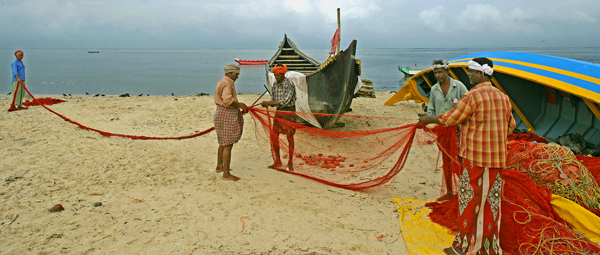
On a holiday at CGH Earth’s Marari Beach, you will find that you do not have the beach to yourself. In fact, that is one of the reasons why the resort won the prestigious and highly-competitive Skal International Eco-tourism award last year. Set up to honour initiatives that not only encourage the conservation of the environment, but also examine community participation, the award reflected Marari Beach’s innovations in conserving nature and the local environment, and working with the community. The resort, with its comfortable 62 cottages styled like a fishing village and spread over 25 acres of coconut grove, is private without being cut off. You could amble down to the local fishing village or exchange friendly ‘hellos’ with the local people on an evening walk down the village roads.
Marari Beach is seen as a good example of a responsible tourism project in a fishing village thanks to its efforts in actively involving the community and utilising the strength of the destination.
says Erin Louis, the General Manager of the resort. This is true of all CGH Earth destinations. And the only uniformity in the resorts under the hotel group is the minimal interference with nature or the local environment, without compromising on luxury. This style of functioning might have been a difficult decision to make two decades back when minimalism was not fashionable in the hospitality industry. But, as it turns out, with the growing concern over the environment and sustainability, it was a timely and well-appreciated one Like a poor man with a big heart, Bangaram, in the Lakshadweep Islands was a remote and bare destination, but one of great beauty, with some of the most spectacular corals in the world. The challenge was not how to turn it around so that it would be plush, but to continue to make it seem untouched. So, the ‘facilities’ are comfortable without causing disturbance, and the guests can’t seem to get enough of the less than 2 sq km island. One repeat guest celebrated her 500th dive in Bangaram last year.
Our first impression of Bangaram was of a nowadays almost unique experience and one that needs protecting. It is very rare to find simple, relatively unspoiled environments in which one can escape from telephones, newspapers, radio and television,
says Richard Peirce, who comes with wife Jacqui to Bangaram every year. “The CGH Earth philosophy of eco-friendliness and local community participation is of vital importance. If mankind doesn’t very soon stop in his headlong suicidal rush to ruin the planet, then I believe we too will eventually become extinct. Philosophies like those espoused by CGH are part of the jigsaw that we need to build if we are to have any chance at saving the planet.” In fact, Bangaram served as the guide for the resorts that followed in the CGH Earth group, and though each of them offers an exclusive experience, the green and home-grown aspects are central. While Marari Beach was honoured by Skal, Spice Village set amidst spice plantations in the Periyar Wildlife Reserve region, won Wild Asia’s annual Responsible Tourism Awards in the ‘Boutique Hotel’ category. The award citation suggests that “by demonstrating how easy and beneficial responsible tourism is to implement, we hope other operators will follow suit”.
Coconut Lagoon has led by example in eco issues such as waste management. Vembanad Lake, on which the resort is set, has a fragile eco-system. Tourism is a big industry in this region, and perhaps, Coconut Lagoon and the CGH Earth-managed houseboats are the few rare ones that do not pump effluents into the lake,
says K.K. Shajimon, president of the Ayemenem Grama Panchayat, the village administrative body, which facilitated the resort – the first time a panchayat has done so in Kerala. “They have also contributed computers and books to our schools, and encourage local women’s self-help groups, which make paper bags for the resorts.” Over the years, CGH Earth has upped the ante; from putting in place high-tech, state-of-the-art waste recycling and management systems, rainwater harvesting and vermi-composting to not using plastic bags, setting up patches of organic vegetables and ayurvedic plants and also butterfly gardens.
The quality of the naturalists at CGH Earth; the skills that they bring are very impressive,
says Hitesh Mehta, author and delegate of international tourism body, TIES. “In hospitality and as eco-resorts, the CGH Earth group is exemplary and in the top bracket. Now, the inspiration for the future has to come from within. It is not a bad idea, because so far it has worked with positive results.”